
Every new computing platform takes something from you in exchange for convenience. The personal computer took your desk, and the smartphone took your attention. Whatever comes next will ask for even more, and the company that builds it gets to decide exactly how much.
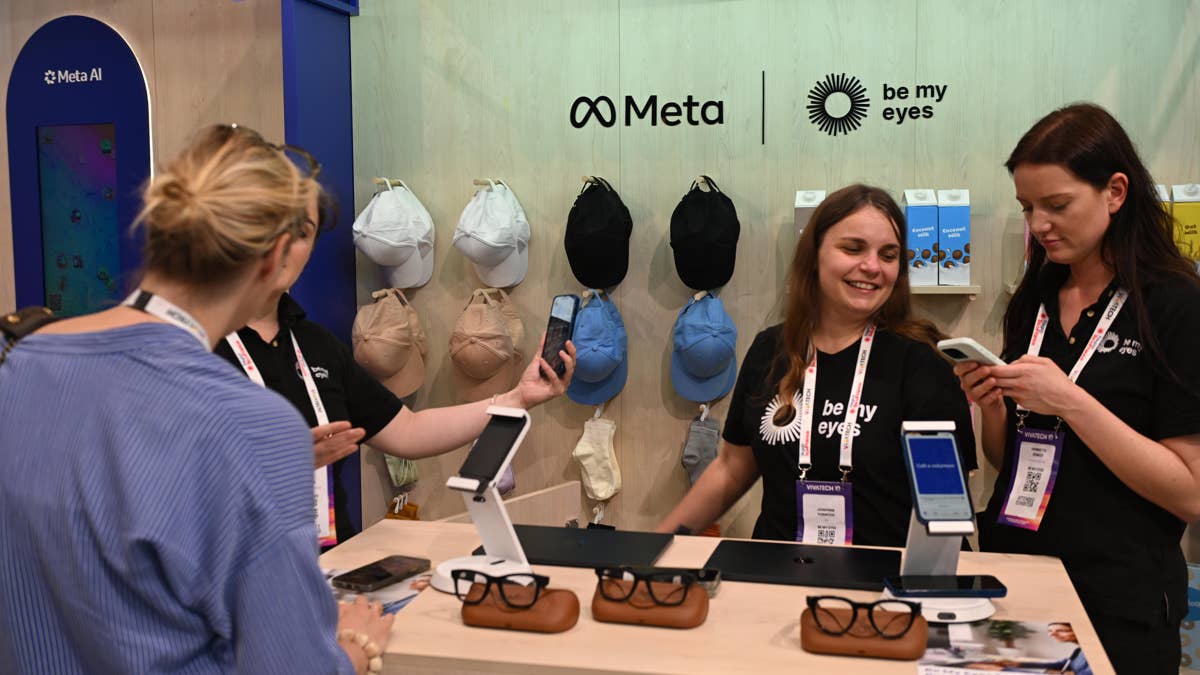
Meta Platforms (META) has spent two years proving it can build that next thing. Its camera-equipped Ray-Ban glasses became the first genuine hardware hit of the artificial intelligence (AI) era, “one of the fastest-growing consumer products of our lifetimes,” according to Meta.
The social contract behind that hit has always been simple. The glasses capture photos and video only when the wearer tells them to, and a white light-emitting diode (LED) on the frame warns everyone nearby that the camera is live.
Meta spent July 7 defending that light. The company rolled out an update that disables the camera entirely if the LED is blocked, physically tampered with, or destroyed, and it promised legal action against businesses that sell tampering services.
One day later, the other shoe dropped. Meta is testing prototype glasses that would “continuously collect audio while taking photos every few seconds,” sources told the Financial Times, as reported by TechCrunch.
The project, known internally as super sensing, would turn Meta’s biggest consumer hit into something closer to a memory machine. It is also the clearest sign yet of how far Mark Zuckerberg will push the one hardware bet that finally paid off.
Meta’s smart glasses success carried a staggering cost
Winning the wearables race has cost Meta more money than most companies earn in a lifetime.
Reality Labs, the division that builds the glasses alongside Quest headsets, posted a $4.03 billion operating loss on just $402 million in revenue in the first quarter, according to CNBC. The unit has piled up more than $80 billion in operating losses since late 2020.
Here is what the bet looks like in hard numbers:
- First-quarter Reality Labs revenue: $402 million, according to CNBC
- First-quarter operating loss: $4.03 billion, according to CNBC
- Cumulative operating losses since late 2020: More than $80 billion, according to CNBC
- Full-year 2025 operating loss: $19.2 billion, according to Statista
The glasses are the one product inside that money pit that actually works. Billions of people already wear glasses to correct their vision, and it was “only a matter of time until all those flip phones became smartphones,” Zuckerberg told analysts in January, according to Statista.
He is spending like he believes it. Meta laid off 1,500 metaverse employees in January to shift money toward AI glasses, then cut roughly 8,000 more roles across the company in May, TheStreet reported.
The demand side finally cooperated, too. Daily active users of the glasses tripled year over year, Zuckerberg said on the April earnings call, and Meta now sells smart frames at prices running from $299 for its in-house line to about $800 for a version with a display.
My analysis of the first-quarter numbers shows why the company keeps pressing. Quest headset sales fell while glasses revenue climbed, executives said on that same call, so the division’s future increasingly sits on people’s faces rather than over their eyes.
Bloomberg / Getty Images
How Meta’s always-on super sensing glasses would work
The prototype flips the product’s core assumption. Instead of waiting for a command, the glasses would watch and listen all day so the wearer can ask what restaurant they just passed or where they left their keys.
Rather than storing raw footage, one proposed system would extract metadata from the recordings and upload that information to Meta’s servers for the AI to query, according to UC Today. Supporters inside the company argue the approach reduces privacy exposure.
More Technology:
- Apple is coming for the entire $200 billion glasses market
- Al-enabled smart glasses allow you to be productive literally anywhere
- Meta launches smart glasses cheaper than Ray-Ban
The louder alarm concerns the light. Executives are reportedly planning not to activate the LED while the always-on features run, meaning people around a wearer would get no visible signal at all, according to The Verge.
When I set the week’s two announcements side by side, the contradiction is hard to miss. Meta confirmed the anti-tampering update is mandatory and already rolling out, according to Engadget, then let slip a roadmap in which the light it just fortified may never switch on.
Translate that into daily life. Every school pickup, gym hallway, and first date within range of a wearer becomes raw material for someone else’s assistant.
Some legal experts see trouble ahead. A device that photographs bystanders every few seconds with no clear signal “runs headlong into the law, not around it,” Fox Rothschild chief AI and information security officer Mark McCreary told UC Today.
The timing could hardly be worse. New York State banned recording-capable eyewear from all of its courtrooms this week, according to The Next Web.
Physics may slow the plan more than outrage does. Constant capture drains a small battery quickly, and skeptics doubt current frames could sustain a full day of it, according to Gizmodo.
One detail should stop investors cold anyway. Some of the new capabilities could reach glasses that people already own through a software update, according to Cybernews, so the always-on era would not need to wait for new hardware.
Why the always-on bet matters for Meta investors
Meta is wagering that perfect memory becomes the killer app before broken trust becomes the killer risk.
The upside case writes itself. An assistant that remembers your entire day is far stickier than a camera you occasionally tap, and stickiness is how Meta turned free apps into a fortune.
The ad machine can fund the experiment. Meta guided 2026 capital spending to between $125 billion and $145 billion, according to its first-quarter report, and the glasses budget is a rounding error inside that number.
The downside shows up in courtrooms and quarterly filings. Wiretap and consent laws vary widely by state, and a device that records strangers by default invites exactly the kind of regulatory fight that has cost Meta billions before.
If you own the stock, watch three things over the next two quarters. Watch whether the no-light plan survives contact with regulators, whether the features actually ship to existing frames through software, and what Meta shows at its Connect conference in September.
That last one matters most, because Connect is where a prototype stops being a leak and becomes a product with a price tag.
The company that spent July 7 promising its camera would never spy on you spent July 8 explaining why it might need to watch everything. Depending on which of those two companies shows up next quarter, investors will decide whether the $80 billion wager was visionary or just expensive.