
A franchise offers an entrepreneur a way to open a business without having to be completely on their own.
Before entering an agreement with a franchise, the company has to share a Franchise Disclosure Document (FDD). That’s a legally mandated document required by the Federal Trade Commission (FTC), and it’s meant to offer material information needed to evaluate the franchise investment.
“The FDD outlines comprehensive information about the roles of both parties involved in the franchise — the franchisor and the franchisee — and is designed to enable the potential franchisee to make an honest and informed decision about their investment in the business. The document lays out how the investment will work in practice for the potential franchisee, which is critical because a franchise is a different type of investment/business,” according to Investopedia.
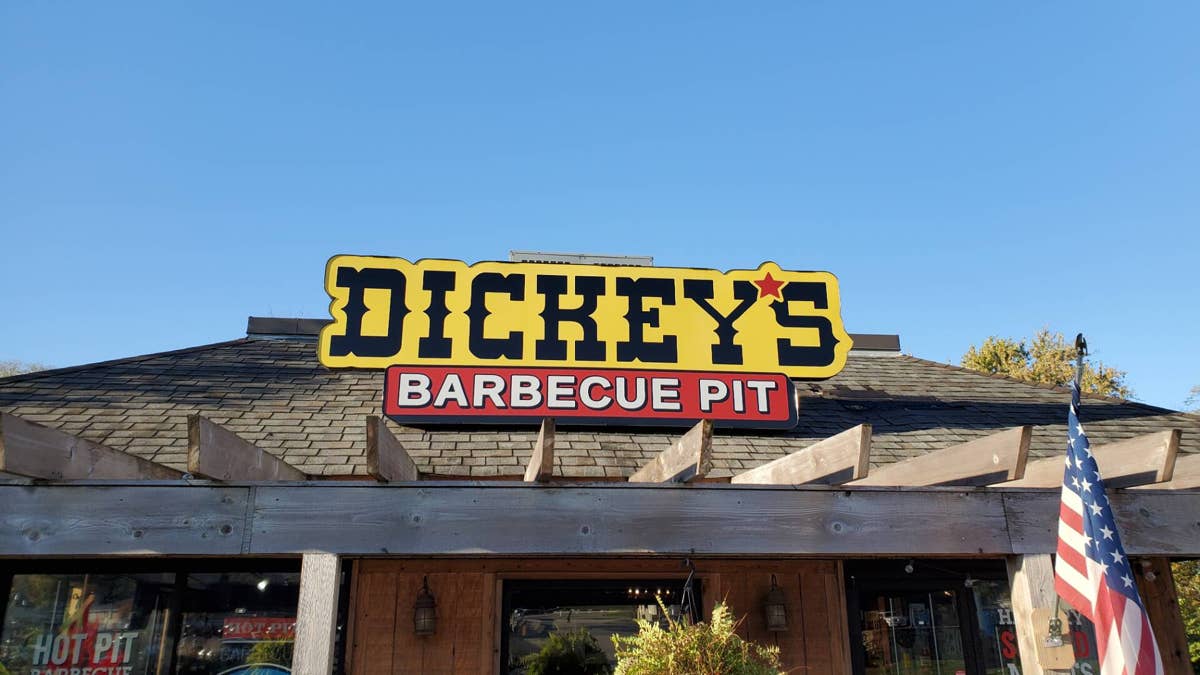
Dickey’s Barbecue Pit, which calls itself the “largest BBQ restaurant brand in the world,” was subject to legal action in California over its disclosures, which the California Department of Financial Protection and Innovation said underreported franchise locations that had ceased operating.
Dickey’s Barbecue Pit lost a legal action
The California Department of Financial Protection and Innovation penalized Texas-based Dickey’s Barbecue Restaurants, Inc., also known as Dickey’s Barbecue Pit, Inc., for violating the California Franchise Investment Law (FIL).
“This enforcement action is part of an ongoing effort by DFPI to protect consumers and increase transparency for entrepreneurs and small businesses in California. The DFPI has ordered Dickey’s to cease its wrongful acts and pay $36,800 in penalties,” according to a press release.
“This underreporting grossly misrepresented the success of the business model, misleading small business owners,” the DFPI added.
Under California law, companies like Dickey’s must make accurate representations in disclosures to prospective franchisees.
“The DFPI found that Dickey’s concealed the true number of its franchise locations that had ceased operating. The company claimed 20 franchisees were no longer in operation; however, the DFPI found the actual number to be 36, almost double what was reported. This underreporting grossly misrepresented the success of the business model, misleading small business owners,” according to the release.
These violations occurred between November 2023 and March 2026.
Dickey’s responds to the California legal action
Dickey’s Barbecue Pit shared a statement with Franchise Times commenting on the enforcement action.
“Dickey’s Barbecue Restaurants, Inc. takes compliance and transparency seriously across all of our markets,” a Dickey’s representative said over email. “The recent matter in California was limited to a minor administrative issue, the type of routine fine many businesses encounter, and it has been learned from and resolved.”
More Restaurants:
- 52-year-old international restaurant chain closing all locations
- 46-year-old casual dining chain closes underperforming locations
- Classic burger chain has closed down all its restaurants
California’s Franchise Investment Law requires franchisors to provide accurate information when selling franchises.
“Dickey’s did not file an updated franchise disclosure document this year in any of the nine states that make franchise registrations publicly available, but its 2025 FDD reported 386 domestic locations at the end of 2024. From 2023 to year-end 2024, the franchise closed 98 net restaurants. In 2024, franchisees sold 108 locations to other franchisees,” Franchise Times reported.
Dickey’s has been shrinking
While Dickey’s Barbecue Pit is not public, Restaurant Business shared some data from a 2019 FDD that show that the brand has gotten smaller.
The 386-location figure and the 507-location figure come from different FDDs and reporting periods, with the former covering year-end 2024 and the latter May 2019.
“Dickey’s operated 507 locations as of May 31, according to the FDD, down from 569 two years earlier. Over that period, 193 locations — more than a third of its locations — were closed either because their franchise agreement was terminated or the operator shut its doors,” the website shared.
The company claims that it operates “376 Dickey’s Barbecue Pit locations and over 866 restaurants across eight distinct concepts in the United States and internationally,” according to its website on Sept 7.
A manual count based on the website’s locations page shows it operates in 38 states and has operations in Canada, the Philippines, the United Arab Emirates, Mexico, and Pakistan.
The chain also lost a recent judge’s ruling.
“A federal court judge has refused to overturn an arbitrator award in favor of a franchisee in a dispute with Dickey’s, saying that the arbitrator did not overstep his authority in awarding the operator $700,000 in damages,” according to Restaurant Business.
Judge Jane Boyle, of the United States District Court for the Northern District of Texas, ruled in favor of the franchisee, G Six Consulting, this summer.
“G Six closed its Illinois location after just three months after the cost of opening the store overran Dickey’s projections in its franchise disclosure document,” the website reported.